The Era of Super-Artificial Intelligence 2026: How Are Hybrid Jobs Reshaping the Labor Market?
Do you remember when the idea of robots taking over jobs was nothing more than an intriguing scenario in science fiction films? That future we once anticipated has arrived rapidly, becoming our reality today. By 2026, artificial intelligence is no longer just a helpful tool—like something used to draft an email or generate an image—but has evolved into a genuine colleague, sitting at the same virtual table and participating in an organization’s strategic decision-making.
As we officially enter the era of "Super AI," the traditional fears of the past have evaporated, giving way to an entirely new reality. The truth is this: AI will not replace humans; rather, employees who master the use of AI will inevitably replace those who refuse to keep pace. From this digital transformation, a new class of professionals has emerged to lead the current landscape: those in "hybrid roles." But what exactly are these roles, and how can you leverage this revolution to secure a leading position?
The Rise of the "Hybrid Employee": The New Superpower in the Job Market
In the recent past, the job market demanded highly specialized, narrow expertise. Today, however, the greatest value lies in flexibility and the ability to integrate different skill sets. A "hybrid employee" is not necessarily a brilliant programmer, nor merely a traditional creative; instead, they are individuals who possess a creative, human touch while simultaneously knowing how to precisely direct AI systems to achieve maximum efficiency. Imagine a graphic designer who doesn’t spend hours drawing backgrounds, but instead uses advanced generative tools to conceive 100 concepts in a single minute—then applies their own intelligence and artistic sensibility to select and refine the final piece. This fusion of human consciousness and machine speed is exactly what companies are seeking—and what they are willing to pay thousands of dollars for.
The 3 Most In-Demand and Lucrative Jobs for 2026
If you are looking to pivot your career path or capitalize on current opportunities, these three roles are dominating global job markets:
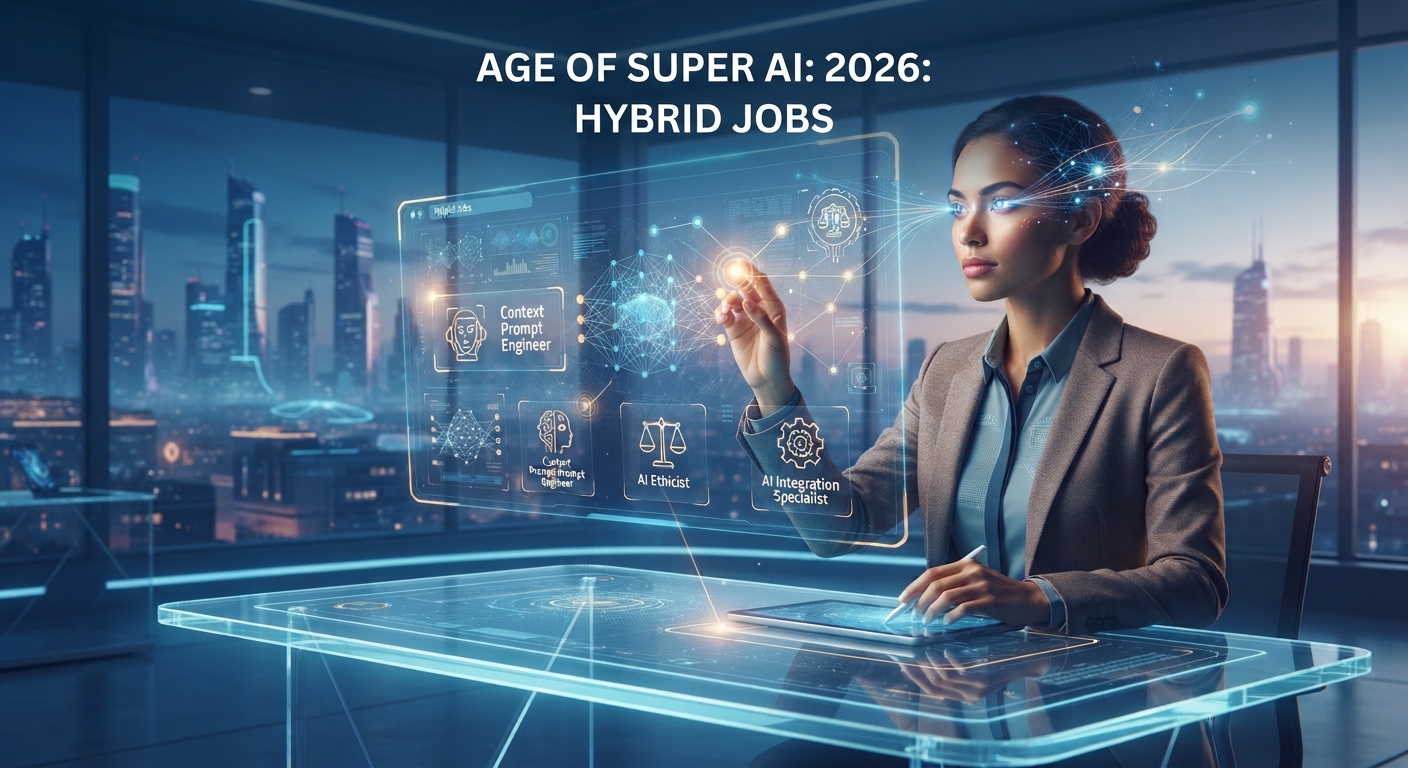
• Context Prompt Engineer: It is no longer just about typing a few words into a text box. Today’s context engineer possesses the ability to imbue a machine with a company’s culture, while grasping the nuances of visual identity and the psychology of the target audience to produce highly precise outputs.
• AI Ethicist: As companies increasingly rely on automated decision-making for hiring and finance, there is a critical need for experts who ensure that these systems do not harbor biases against specific groups and that user data is subject to the highest standards of protection and security.
• AI Integration Specialist: Acting as the "architect" for the modern enterprise, this professional’s primary task is to connect various AI tools, ensuring they function as a single, harmonious ecosystem that boosts employee productivity.
"Future-Proof" Skills: How to Safeguard Your Career
While the power of machines continues to grow, there remain domains that are entirely beyond the reach of automation. If you want to build a career that artificial intelligence cannot erase, focus on honing the following skills:
1. Critical thinking and complex problem-solving: While AI excels at providing solutions based on historical data, it lacks "human intuition." Your ability to evaluate these solutions and select the one best suited to a human context is your competitive advantage.
2. Emotional intelligence and effective communication: A machine cannot build a trusting relationship with a client, motivate a team through a crisis, or negotiate a complex business deal. Social skills are your most valuable currency today.
3. Continuous learning and digital agility: The ability to discard outdated tools and adopt new technologies within a matter of weeks is what separates those who stay ahead from those who fall behind.
A practical guide: How can you begin your transformation journey today?
The good news is that you do not need a degree in computer science to get on board. You can start with a few simple, actionable steps:
• Integrate AI into your daily routine: Begin using available tools to accelerate your current tasks—such as managing your time, drafting ideas, or analyzing basic data.
• Invest in micro-learning: Take advantage of short, intensive courses available on global platforms to learn the fundamentals of working with data and prompting machines.
• Build a modern portfolio: When applying for a job, don’t just submit a traditional resume; showcase projects you have completed with significantly greater efficiency by leveraging smart technologies. Conclusion: The Future Belongs to Those Who Command the Machine, Not Those Who Fear It
The digital divide in today’s job market is widening rapidly, and the train does not wait for the hesitant. Fearing technology will not halt its progress; rather, embracing it and understanding how it works is your golden ticket to excellence, profitability, and professional stability. Shift your mindset today—from a "fear of being replaced" to a "passion for leadership"—and turn advanced artificial intelligence into the most powerful ally in your career journey.